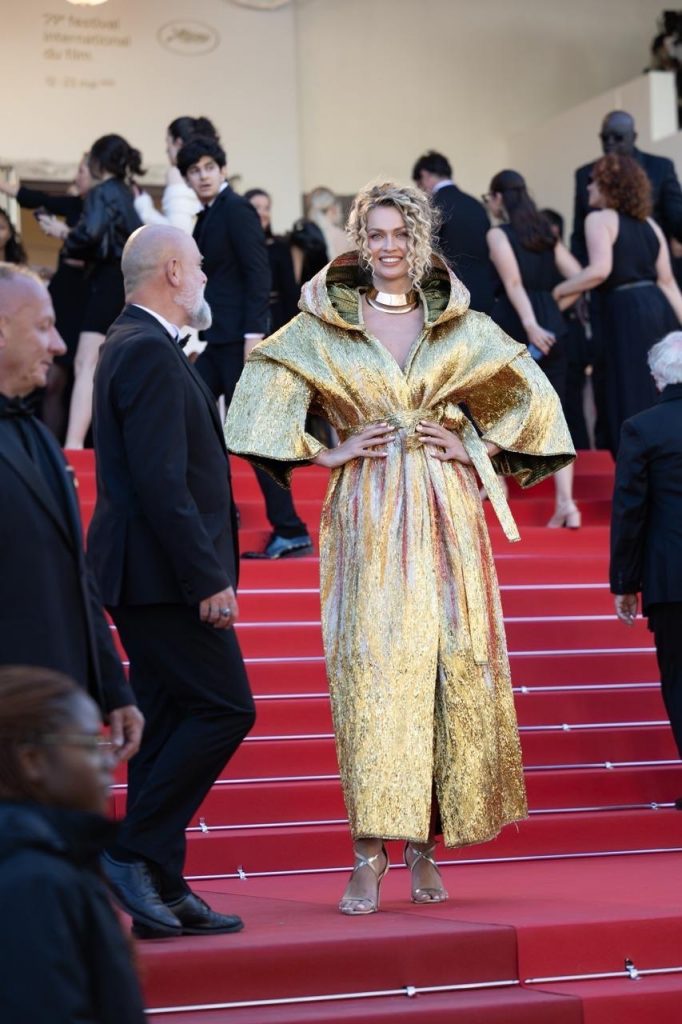
The Cannes Film Festival has always been a theatre of reinvention. But by 2026, the reinvention was complete. Cinema still mattered, of course. The premieres, the tuxedos, the midnight standing ovations inside the Palais — those rituals remained untouched. Yet outside the screening rooms, another kind of power had taken over the Croisette. Founders replaced producers. Wellness moguls stood beside movie stars. Fashion influencers moved through hotel lobbies with the confidence once reserved for Cannes royalty. The red carpet had evolved into something larger than film: a global marketplace of influence. And somewhere inside that transformation stood Nadezhda Grishaeva. Her appearance at Cannes this year wasn’t treated as a celebrity stunt or a curiosity from the fitness world. If anything, it felt inevitable — the arrival of a figure perfectly engineered for the modern attention economy: part former athlete, part entrepreneur, part lifestyle architect. Because Cannes in 2026 no longer belongs exclusively to cinema. It belongs to people capable of building worlds around themselves.
The New Croisette
For decades, Cannes functioned like a sealed universe. Actors, directors, financiers, European aristocracy — the ecosystem was tightly controlled, almost ceremonial. But social media shattered the old hierarchy. Luxury brands realized something Hollywood had been slow to accept: digital influence could move culture faster than traditional fame ever could. Today, the Croisette runs on visibility.
Fashion houses host influencer dinners more aggressively than studio afterparties. Wellness founders sit front row beside actresses. Athletes arrive not merely as guests, but as ambassadors for billion-dollar lifestyle ecosystems. The line between celebrity, entrepreneur, and media platform has all but disappeared. This year, the shift felt impossible to ignore.
TikTok creators mingled with Oscar winners at Hôtel du Cap. Sports stars walked carpets in custom couture. Wellness executives closed brand deals over rosé on private terraces overlooking the Mediterranean. Cannes has become less of a film festival and more of a live-action map of modern cultural power. And Grishaeva’s presence fit seamlessly into that landscape.
From Olympic Discipline to Lifestyle Empire
Long before the Riviera, there was basketball. Before she entered the world of luxury wellness, Nadezhda Grishaeva built her reputation in European professional sports, competing at the highest levels of international basketball and representing Russia at the 2012 London Olympics.
Those who followed her athletic career remember the intensity first: physical dominance, relentless conditioning, almost surgical discipline. But what separated her from many athletes of her generation was an unusual understanding of image, branding, and long-term positioning — years before most athletes began thinking like founders.
Retirement could have led toward television commentary, sponsorship deals, or the standard carousel of sports celebrity appearances. Instead, she built infrastructure.
Her project, Anvil, emerged not as another premium gym, but as a carefully constructed lifestyle universe — one designed around the idea that modern fitness is no longer about exercise alone. It is about identity. Inside these spaces, lighting matters as much as equipment. Music is curated like a nightclub soundtrack. Architecture becomes emotional engineering. Training transforms into social ritual. Fitness, in this vision, becomes theater.
Wellness Is the New Luxury
The timing could not have been better. Across Dubai, Miami, Riyadh, Singapore, and London, the global wellness economy has undergone a dramatic transformation over the past several years. The modern luxury consumer no longer wants only hotels, restaurants, or designer labels. They want optimization. Longevity. Experience. Atmosphere. The gym is no longer just a gym. It is a members club. A networking venue. A social signal. A form of modern status architecture.
That shift created an entirely new category of entrepreneur: founders capable of merging hospitality, fashion, wellness, nightlife, and digital storytelling into a single ecosystem. Grishaeva belongs squarely to that category.
What makes her rise particularly interesting is how naturally it mirrors the broader cultural mood of the mid-2020s. Strength became fashionable again. Discipline became aspirational. Wellness replaced excess as the dominant language of luxury. The body itself became part of branding.
Why Cannes Makes Sense
Ten years ago, the presence of a wellness entrepreneur on the Cannes red carpet might have triggered confusion. Today, it feels entirely logical. Because Cannes itself has changed.
The festival now operates as a collision point between cinema, luxury fashion, tech, sports, hospitality, social media, and global branding. The people invited into that ecosystem are no longer selected solely for artistic output. Increasingly, they are chosen for their ability to command attention across industries simultaneously. This is where Grishaeva’s trajectory becomes culturally relevant. She represents a growing class of “hybrid figures” — personalities whose influence is built not around a single profession, but around the ability to connect multiple worlds at once: sport, entrepreneurship, wellness, fashion, and digital media.
And that archetype may define this era more than the traditional celebrity ever did.
The Era of Hybrid Influence
Perhaps the clearest takeaway from Cannes 2026 is that modern influence no longer follows old Hollywood rules. Today’s public figures are expected to be multidimensional. Athletes become founders. Founders become media personalities. Influencers become investors. Fashion merges with performance culture. Wellness merges with hospitality. Everything overlaps. The most valuable people in the room are no longer simply famous. They are scalable. And in that sense, Nadezhda Grishaeva feels less like an outsider entering Cannes and more like a preview of where global culture is headed next. Because the future belongs to people who can turn lifestyle into mythology.